

Inspiration · Community culture
Beware: Known Community Syndromes
Different behaviors. Same impact. A stronger you. Every community knows them – the little patterns that turn good intentions into problems: the know-it-all who guarantees results, the eternal idea chaser, the one carrying the baggage of the past, the constant asker, the quick judge, the clickity-clicker and the alarmist. This page takes them apart with a wink – and shows how to do better.
Not as an accusation, but as a mirror: whoever recognizes themselves in a syndrome has already taken the first step. Same community. Higher standards.
The 7 syndromes at a glance: 1. Compliance Syndrome · 2. Shiny Object Syndrome · 3. Ex-Baggage Syndrome · 4. Ask-First Syndrome · 5. Same-Thing Syndrome · 6. Clickity Click Syndrome · 7. Code Red Syndrome
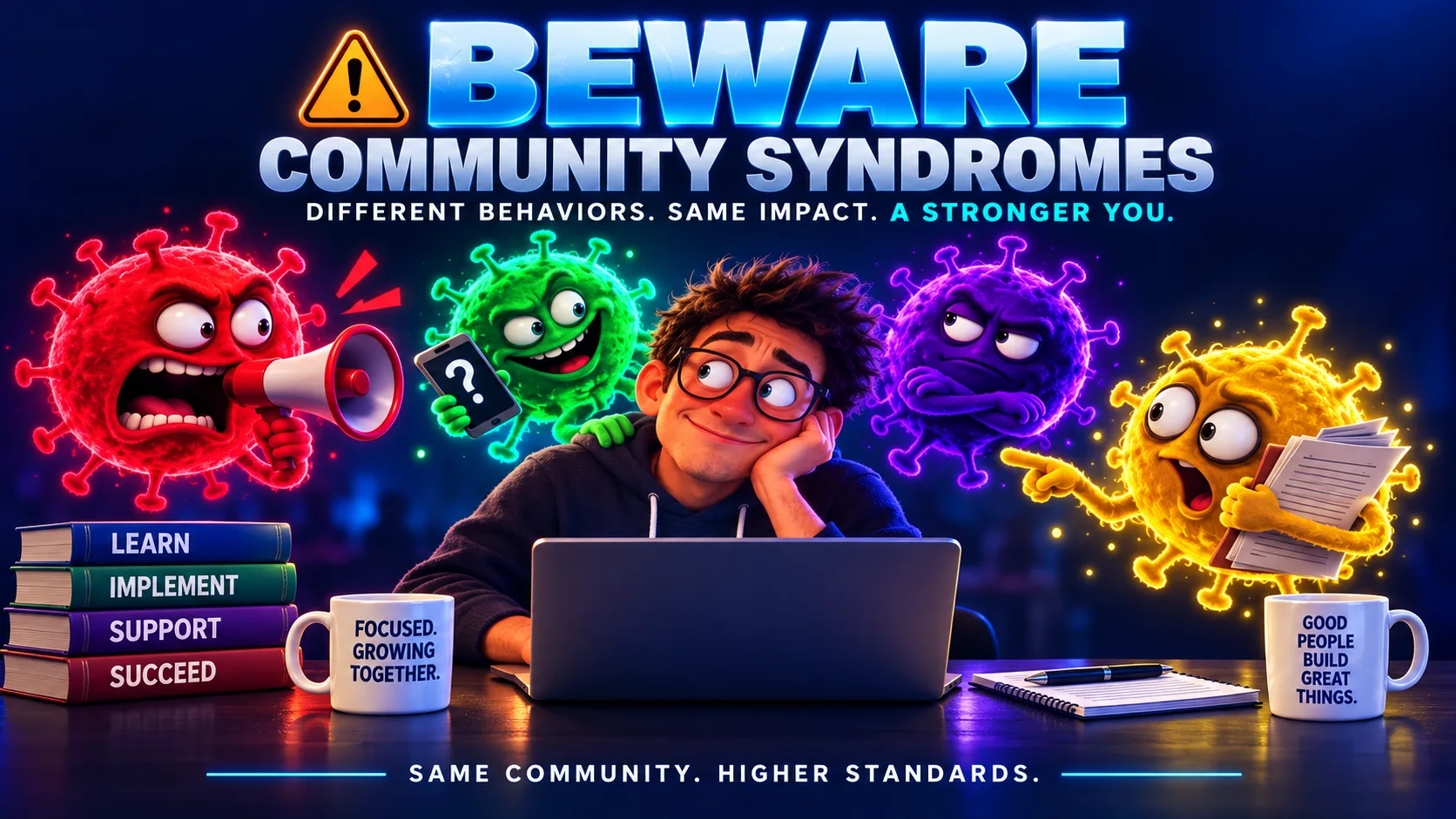
Learn · Implement · Support · Succeed. Focused. Growing together. Good people build great things.
Syndrome 1 of 7
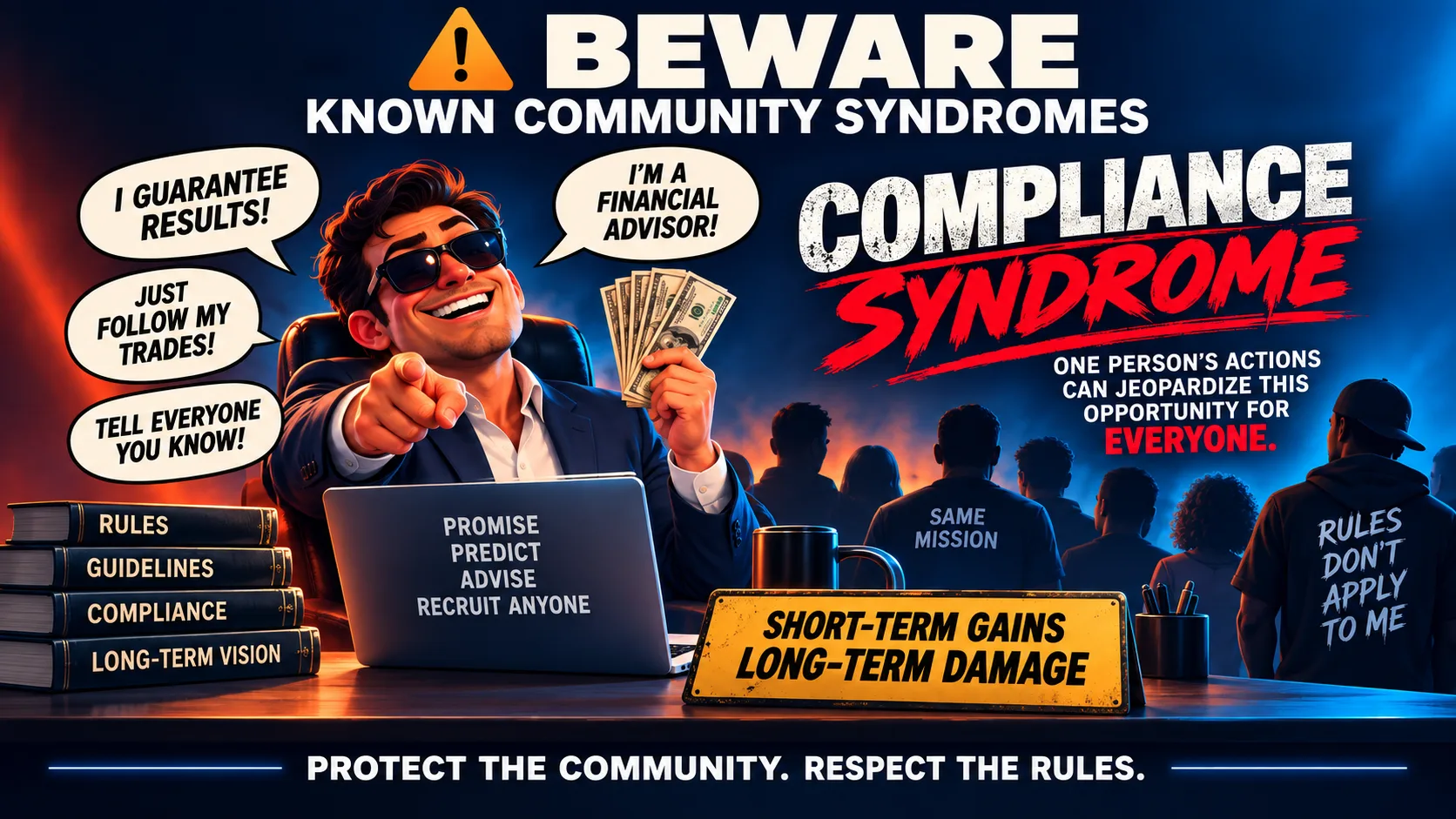
Compliance Syndrome
Short-term gains. Long-term damage.
How to recognize it: “I guarantee results!”, “Just follow my trades!”, “Tell everyone you know!” – the compliance dodger promises, predicts, advises and recruits anyone. Rules? They apply to other people.
What it costs: One person’s actions can jeopardize this opportunity for everyone. Whoever promises returns or poses as a financial advisor doesn’t just risk themselves – they put the whole community and the platform it is built on at risk.
The way out: Know the rules, the guidelines and the long-term vision – and live them. Share experiences, not promises. Report instead of advising. That is how the opportunity stays open for everyone.
Takeaway: Protect the community. Respect the rules.
Syndrome 2 of 7
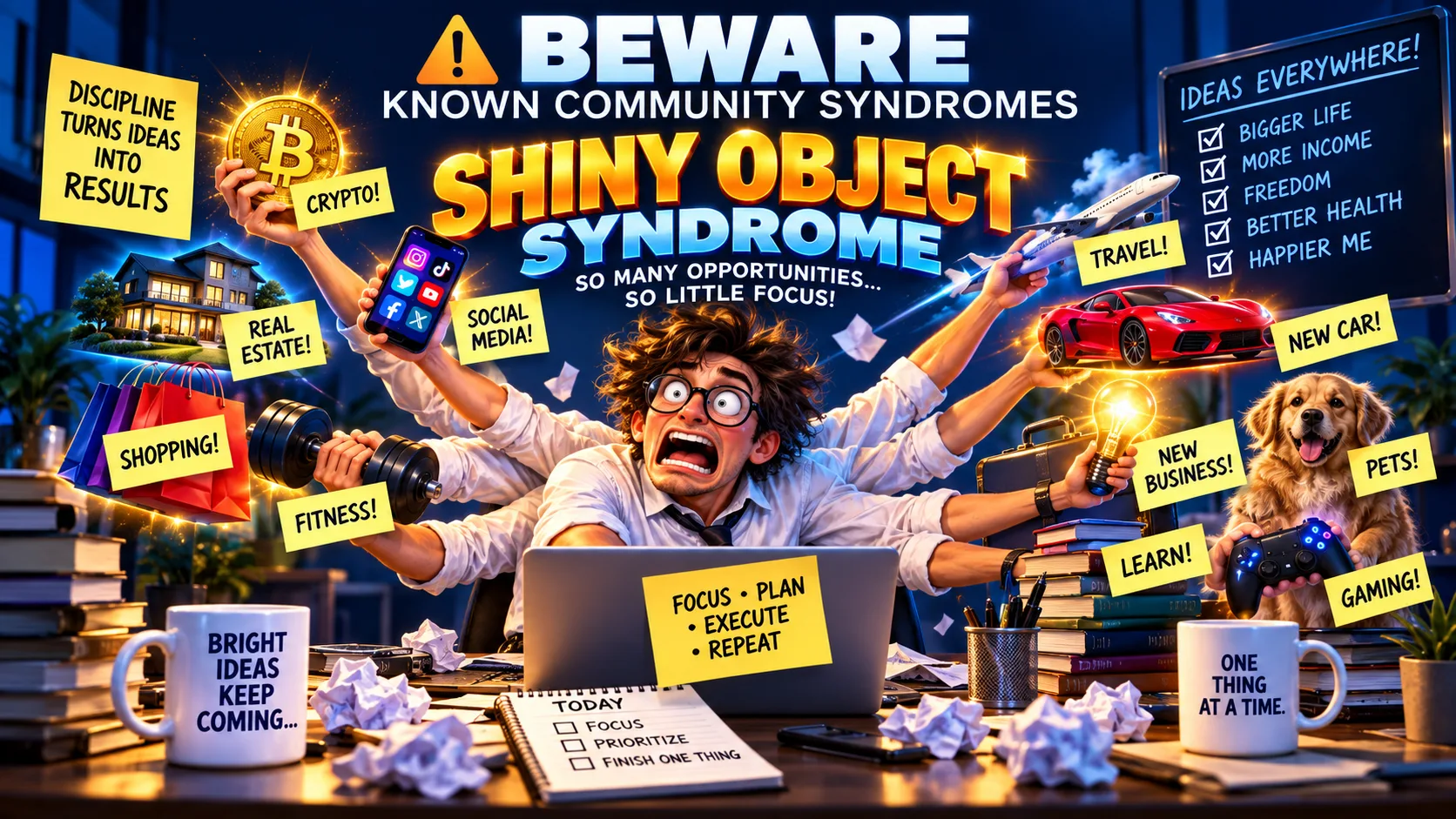
Shiny Object Syndrome
So many opportunities … so little focus.
How to recognize it: Crypto! Real estate! New business! Fitness! Social media! Travel! Ideas everywhere – and every new one shines brighter than yesterday’s. Plenty gets started, very little gets finished.
What it costs: Whoever wants everything at once finishes nothing. Energy, time and capital get spread across ten building sites, and none of them produces a result. Bright ideas keep coming – results don’t.
The way out: Discipline turns ideas into results. Focus – plan – execute – repeat. One thing at a time: set priorities, finish one thing, then start the next.
Takeaway: One thing at a time.
Syndrome 3 of 7
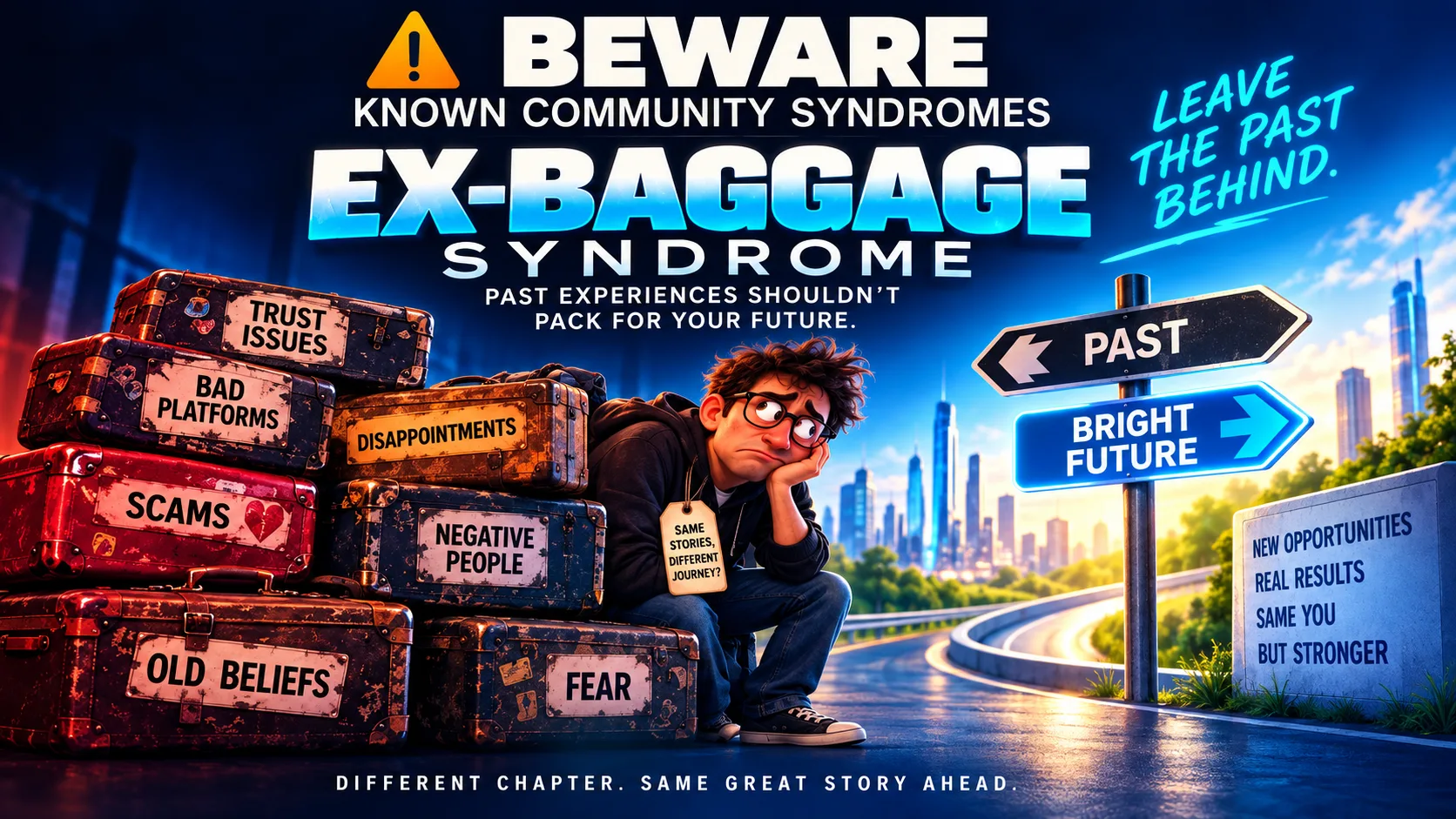
Ex-Baggage Syndrome
Past experiences shouldn’t pack for your future.
How to recognize it: Trust issues, bad platforms, disappointments, scams, negative people, old beliefs, fear – a whole stack of suitcases from the past, dragged along with every new step.
What it costs: Whoever looks at every new opportunity through the lens of old wounds sees the next disappointment everywhere – and misses what is really in front of them. Same stories, different journey?
The way out: Learn from the past, but leave it behind you. New opportunities, real results – same you, but stronger. Check critically, decide consciously and give the new chapter a fair chance.
Takeaway: Different chapter. Same great story ahead.
Syndrome 4 of 7
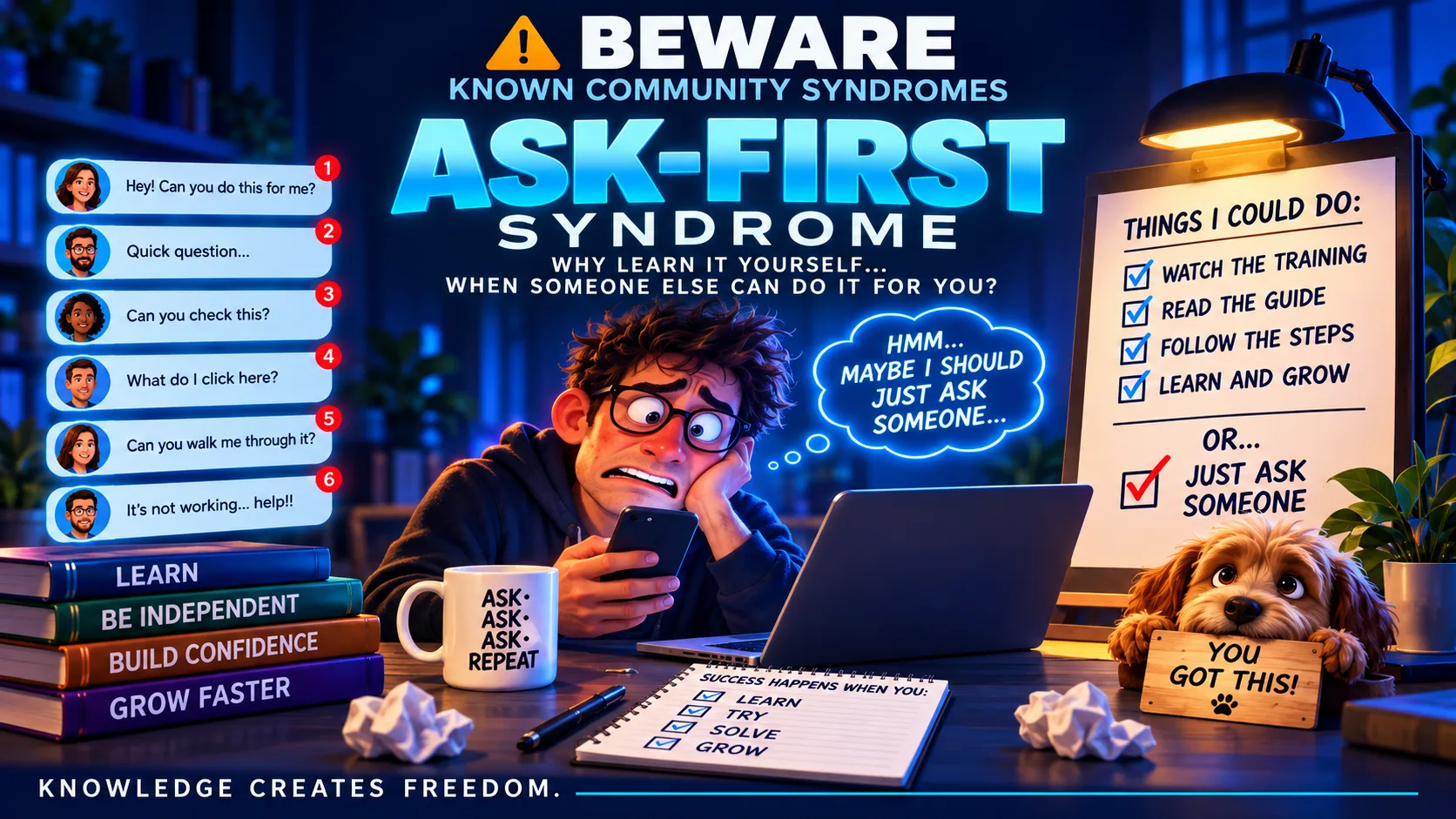
Ask-First Syndrome
Why learn it yourself when someone else can do it for you?
How to recognize it: “Can you do this for me?”, “Quick question…”, “What do I click here?”, “Can you walk me through it?” – before the training is watched or the guide is read, someone is already being asked.
What it costs: Whoever always asks first never learns. Every answer only solves this one problem, never the next – and the dependency grows with every message. For the helpers it becomes a full-time job.
The way out: Watch the training, read the guide, follow the steps, learn and grow. Success happens when you learn, try, solve and grow. Asking is allowed – after your own attempt. You got this!
Takeaway: Knowledge creates freedom.
Syndrome 5 of 7
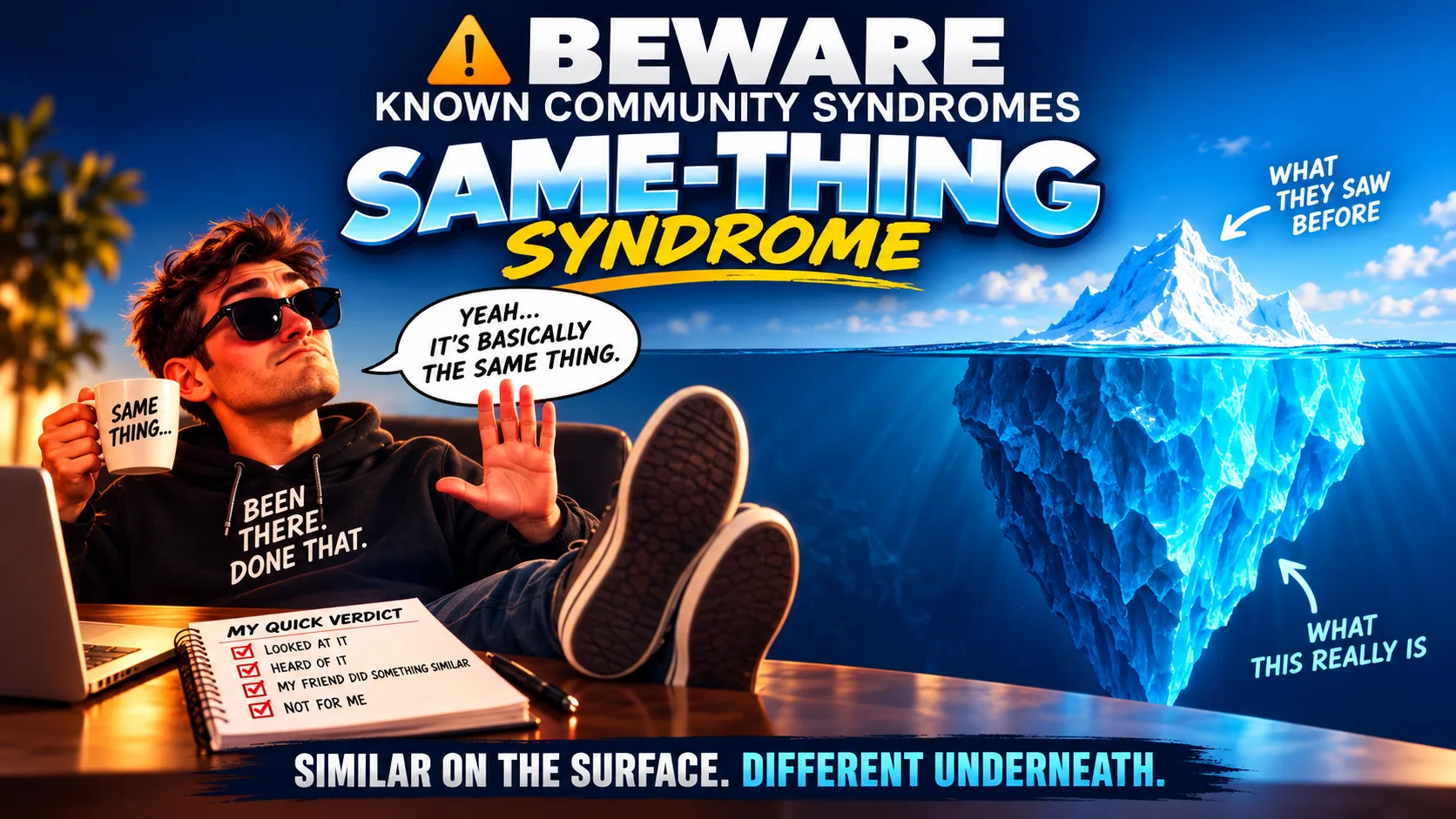
Same-Thing Syndrome
Similar on the surface. Different underneath.
How to recognize it: “Been there. Done that.” The quick verdict is in after five seconds: looked at it, heard of it, a friend did something similar – not for me.
What it costs: Like an iceberg, what they saw before is only the tip. Whoever compares only the surface overlooks the structure, rules, risk management and community underneath – and mistakes similarity for sameness.
The way out: Look closely before you judge. Ask the questions that reveal the difference: How does it really work? Who is behind it? Which rules apply? Then decide.
Takeaway: Similar on the surface. Different underneath.
Syndrome 6 of 7
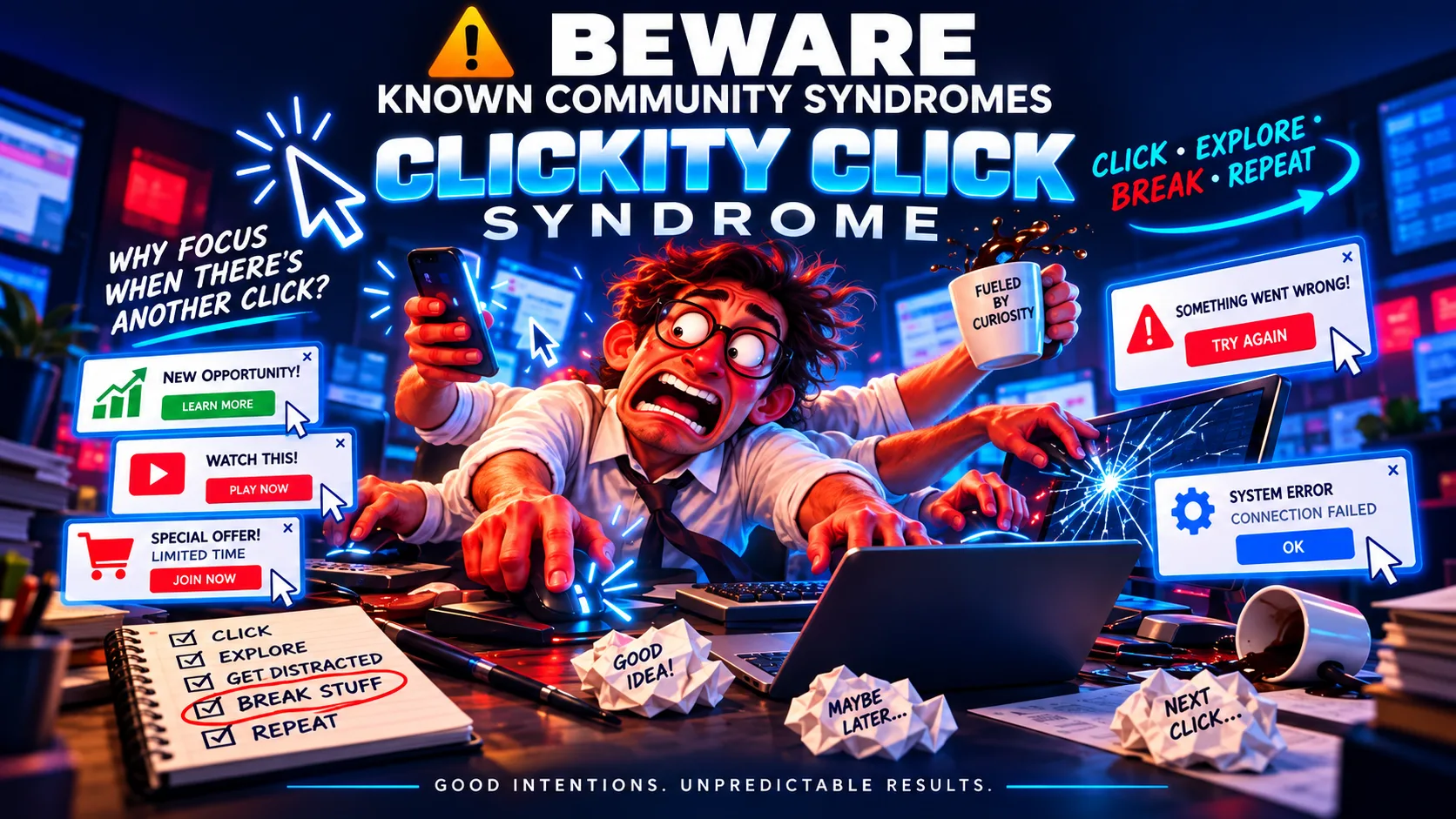
Clickity Click Syndrome
Why focus when there’s another click?
How to recognize it: New opportunity! Watch this! Special offer! Fueled by curiosity: click, explore, get distracted – and every now and then break stuff. Then: “Something went wrong”, “Connection failed”.
What it costs: Good intentions, unpredictable results. Whoever clicks around in settings, platforms and tools without knowing what a click triggers produces errors that others have to clean up later – and loses their own focus along the way.
The way out: Understand first, then click. Stick to the guide, change only what you know, and ask when unsure before something breaks. Curiosity is good – with a plan it is powerful.
Takeaway: Good intentions. Unpredictable results – when the plan is missing.
Syndrome 7 of 7
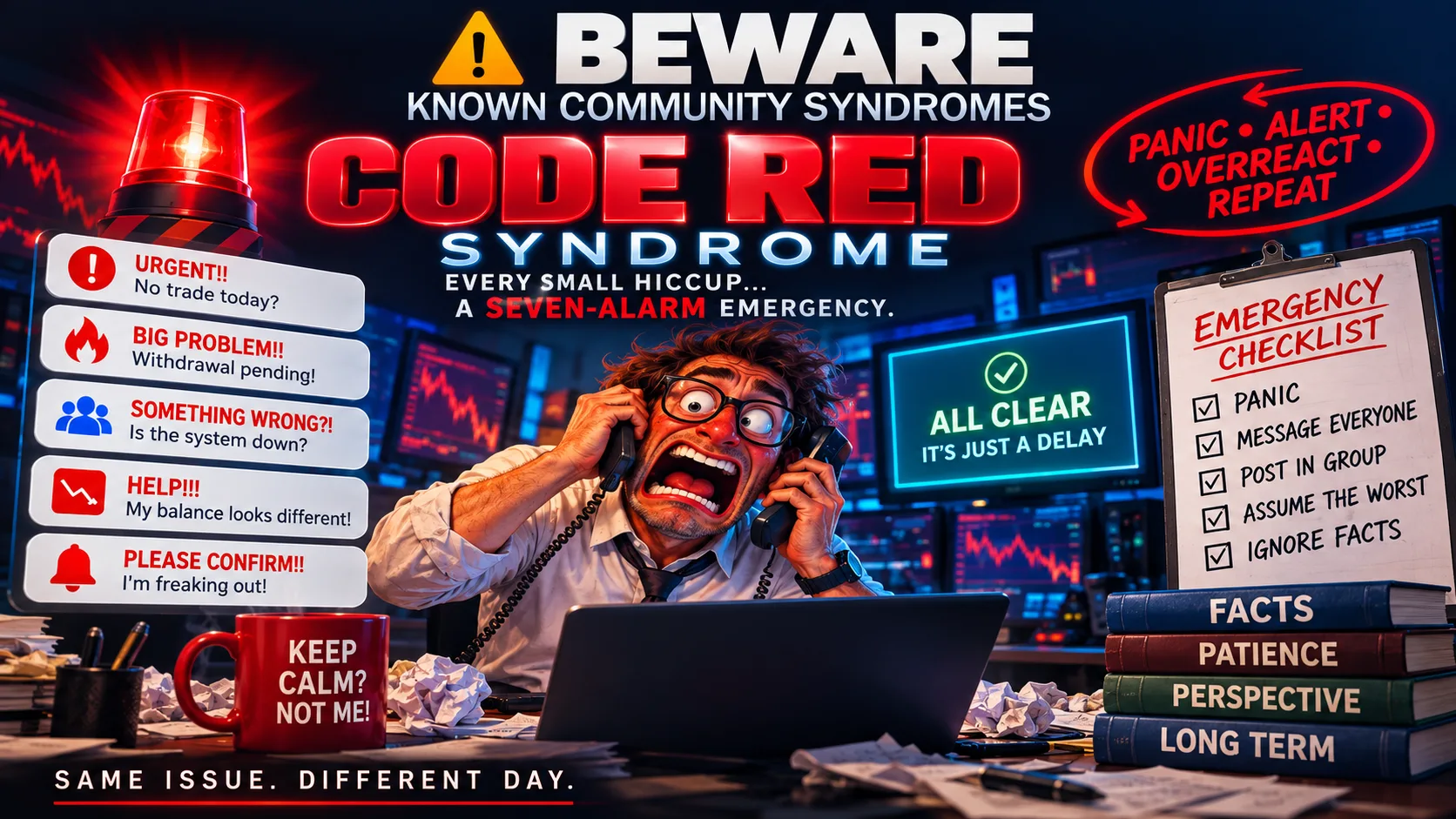
Code Red Syndrome
Every small hiccup … a seven-alarm emergency.
How to recognize it: “Urgent!! No trade today?”, “Big problem!! Withdrawal pending!”, “Help!!! My balance looks different!” – panic, alert, overreact, repeat. The emergency checklist: message everyone, post in the group, assume the worst, ignore facts.
What it costs: Panic spreads faster than any all-clear. Most of the time it is just a delay – but the commotion costs everyone involved time, nerves and trust. Same issue, different day.
The way out: Facts, patience, perspective, long-term thinking. Check the official information first, wait for the all-clear and ask a calm question instead of raising an alarm. Keeping calm is a skill – and it can be trained.
Takeaway: Facts. Patience. Perspective. Long term.
Same community. Higher standards.
Frequently asked questions
What are community syndromes?
Community syndromes are typical behavior patterns that show up in every community – whether a trading community, a club or a team. They usually grow out of good intentions (enthusiasm, curiosity, caution, helpfulness) but slow everyone down when left unchecked. The term is deliberately tongue-in-cheek: this is not about diagnoses, but about self-reflection.
I recognize myself in several syndromes – is that bad?
Quite the opposite: that is normal and the best starting point. Almost everyone knows phases of Shiny Object Syndrome or Code Red. What matters is noticing the pattern and consciously acting differently next time – one syndrome at a time.
Why is the Compliance Syndrome the most important one?
Because it is the only one that affects more than the individual: whoever promises returns, pretends to give financial advice or recruits unasked puts the community and the platform at risk for all members. Sharing experiences is welcome – promises, predictions and advice are not.
How do I get the most out of this page?
Read through the seven syndromes once, pick the one that is holding you back the most right now, and take its takeaway with you for the coming week. Feel free to share the page with people it could help – that is what it is for.
Focused. Growing together.
Rules, guidelines, compliance and a long-term vision are not a cage – they are the foundation a community stands on. Whoever learns, implements, supports and stays calm grows – and takes others along. The community itself is reserved for members – and membership is free. Good people build great things.